

GCC freight operators, port authorities, and 3PL providers face growing pressure to measure, report, and reduce emissions across complex multimodal supply chains. 4Scope is the ESG platform logistics GCC operators rely on to unify emissions data, automate disclosures, and stay ahead of regulatory mandates.
Get Your Logistics ESG Readiness Assessment


GCC freight moves through road, sea, air, and rail corridors, each governed by different reporting standards. Without a unified methodology, logistics operators risk non-compliance across jurisdictions and face penalties that compound with every unreported shipment leg.

Large shippers and government procurement bodies now require documented Scope 3 logistics GCC disclosures from their supply chain partners. Freight forwarders and 3PLs that cannot provide verifiable per-shipment carbon data lose access to high-value contracts.
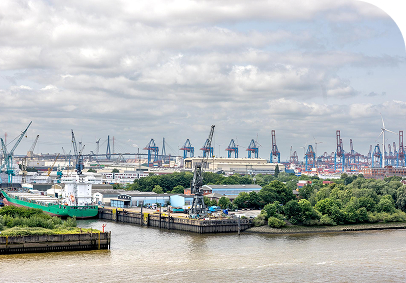
Jebel Ali, Khalifa Port, and King Abdulaziz Port increasingly tie operational licenses and berth allocations to documented environmental performance. Operators without structured sustainability reporting face scheduling delays and restricted access.

Most logistics providers collect fuel, distance, and load data in disconnected systems: TMS for routing, ERP for procurement, and telematics for vehicles. This fragmentation makes accurate emissions calculation manually impossible at scale.

GCC sustainable bond issuance is on track to exceed USD 20 billion in 2026. Lenders and investors now evaluate logistics companies on the credibility of their ESG disclosures, making software-backed reporting a prerequisite for capital access.
4Scope is 4Seer Technologies’ sustainability reporting platform, purpose-built to handle the data complexity of multimodal freight operations. The platform connects directly to TMS, ERP, telematics, and fleet management systems to pull activity data at the shipment level, calculate emissions using GLEC and ISO 14083 methodologies, and generate disclosure-ready reports across GRI, IFRS S1/S2, and GCC Exchange metrics.
For logistics operators managing fleets, warehouses, and port-side facilities across multiple GCC jurisdictions, 4Scope eliminates manual data consolidation. The platform maps each transport chain element to its corresponding emission factor automatically, delivering one auditable record from pickup to final delivery.


Connect your fleet, freight, and facility data into one platform that calculates emissions per shipment and generates compliant reports automatically. Talk to our logistics ESG specialists about your reporting requirements.

4Scope calculates emissions across road, sea, air, rail, and intermodal legs in a single workflow. The engine applies mode-specific emission factors aligned with ISO 14083, so freight operators get accurate per-shipment carbon data without switching between tools.

The platform connects to GPS and telematics systems to capture real-time fuel consumption, distance, and load data from every vehicle in your fleet. Fleet emissions tracking UAE operators need starts with live data, not spreadsheet estimates.

4Scope traces emissions beyond your direct operations to upstream suppliers, subcontracted carriers, and downstream distributors. This end-to-end Scope 3 logistics GCC mapping gives freight forwarders and shippers full visibility into their value chain carbon exposure.

Every emissions calculation follows the GLEC Framework methodology and ISO 14083 transport chain standards. This alignment means your freight emissions reporting GCC outputs meet the quality thresholds required by SBTi and international auditors.

4Scope captures emissions from container handling equipment, shore power usage, reefer units, and terminal vehicle movements. This port operations sustainability platform UAE terminal managers need accounts for every emission source within the gate.

The platform produces formatted reports aligned with GRI, IFRS S1/S2, and the 29 GCC Exchange ESG metrics. Logistics companies no longer need to manually compile disclosures from fragmented data across entities, routes, or subsidiaries.

4Scope breaks down emissions by trade lane, transport mode, and carrier to identify high-carbon routes. Operations teams use these analytics to evaluate modal shifts, consolidation strategies, and carrier selection decisions that reduce both cost and carbon.

Refrigerated transport adds significant emissions beyond standard freight. 4Scope tracks reefer fuel consumption, temperature-controlled warehouse energy use, and cold chain transit emissions separately, giving operators precise data on this high-impact category.
We audit your current logistics data landscape: fleet telematics, TMS configurations, warehouse energy metering, and existing reporting workflows. This assessment identifies data gaps, integration requirements, and the regulatory frameworks applicable to your GCC operations, so 4Scope deployment targets the right emissions sources from day one.

Our team configures 4Scope to mirror your operational structure: routes, fleet segments, port facilities, warehouse clusters, and subcontracted carrier networks. We map each data source to the correct GLEC emission factor and build custom dashboards for operations managers, sustainability teams, and executive leadership.

4Scope connects to your TMS, ERP, telematics, and facility management systems through APIs and scheduled data feeds. We validate emissions calculations against historical fuel and activity records, run parallel reporting cycles to confirm accuracy, and train your teams on data entry, review, and approval workflows.

After go-live, we continuously refine emission factor accuracy as your operations evolve: new routes, fleet upgrades, modal shifts, or facility expansions. Quarterly reviews benchmark your performance against sector averages, identify reduction opportunities, and ensure your disclosures stay aligned with changing GCC regulations.

A freight forwarder managing road and sea shipments between Dubai, Riyadh, and Muscat uses 4Scope to calculate per-shipment emissions across each transport leg. The platform consolidates data from multiple carriers and modes into one report, aligned with GLEC methodology. Sustainability software logistics UAE forwarders require must handle cross-border complexity without manual reconciliation.
Outcome: Unified multi-country emissions reporting from a single platform.
A terminal operator at Jebel Ali tracks emissions from container handling equipment, truck turnaround idling, and shore-to-ship power usage through 4Scope. The port operations sustainability platform UAE terminal managers deploy captures every emission source within the facility perimeter.
Outcome: Complete Scope 1 and 2 reporting for terminal operations.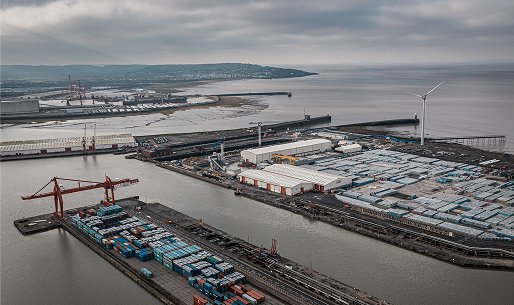
A third-party logistics provider operating warehouses and distribution fleets across Dubai, Abu Dhabi, and Dammam consolidates entity-level emissions data into a single 4Scope instance. The 3PL ESG reporting software UAE providers adopt must support multi-entity rollup without duplicating data entries.
Outcome: Consolidated ESG disclosures across all operating entities.
A cold chain operator moving temperature-sensitive goods from Khalifa Port to inland distribution centers uses 4Scope to separate reefer emissions from standard freight carbon. The platform tracks refrigerant leakage, auxiliary power unit fuel, and warehouse cooling energy independently.
Outcome: Granular cold chain emissions data for investor and regulatory reporting.
A last-mile delivery operator running electric and diesel vehicles across Dubai uses 4Scope to track fleet emissions by vehicle type, route zone, and delivery density. The logistics carbon software Dubai operators need provides per-delivery carbon intensity metrics that support green logistics certifications.
Outcome: Route-level emissions visibility for fleet transition planning.





Unlike generic ESG platforms, 4Scope handles the specific data structures of logistics: tonne-kilometres, container weights, modal splits, and transit hub emissions. The platform was designed around how freight actually moves, not adapted from a factory emissions template.

4Scope embeds the GLEC Framework and ISO 14083 transport chain methodology directly into its calculation engine. ESG reporting shipping UAE operators produce through 4Scope meets the quality standard that SBTi, GHG Protocol, and international auditors expect.

Whether you operate 50 vehicles or manage a 500-truck cross-border fleet, supply chain ESG software Dubai operators deploy through 4Scope scales without performance degradation. Add new entities, routes, and carriers without restructuring your reporting architecture.

4Seer’s background in enterprise data engineering means 4Scope does not just collect sustainability metrics. The platform’s integration layer connects to ERP, TMS, and telematics systems at the data pipeline level, ensuring every emissions figure traces back to a verified operational record.

4Scope’s compliance library is maintained against active GCC regulatory timelines: UAE Federal Climate Law, GCC Exchange metrics, SCA sustainability mandates, and IFRS S1/S2 requirements. The platform flags upcoming deadlines and identifies disclosure gaps before they become violations.
The best sustainability reporting platform for logistics and supply chain in GCC connects directly to freight management, telematics, and warehouse systems to calculate emissions per shipment, per route, and per facility. It must support GLEC Framework and ISO 14083 methodologies to produce auditable transport chain carbon data. 4Scope meets these requirements by pulling activity data from TMS and ERP systems, applying mode-specific emission factors, and generating reports aligned with GRI, IFRS S1/S2, and the 29 GCC Exchange ESG metrics.
The best ESG software for UAE logistics companies handles multimodal emissions across road, sea, air, and last-mile delivery networks. It must integrate with fleet telematics for real-time fuel and distance data, support Scope 1, 2, and 3 calculations, and automate disclosures against UAE Federal Climate Law requirements. 4Scope delivers all of these capabilities as a sustainability software logistics UAE freight operators, 3PLs, and port service providers use to consolidate emissions data from fragmented operational systems into a single reporting platform.
Fleet emissions tracking UAE logistics companies perform through 4Scope begins with connecting GPS and telematics systems that capture fuel consumption, distance traveled, and payload weight per trip. The platform applies vehicle-specific emission factors based on fuel type, engine class, and load profile. 4Scope then aggregates this data by fleet segment, route, or business unit. Operators can compare diesel, CNG, and electric vehicle emissions side by side, identify high-carbon routes, and generate reports that meet both internal sustainability targets and regulatory mandates.
Top Scope 3 reporting tools for GCC supply chains must trace emissions beyond direct fleet operations to subcontracted carriers, upstream suppliers, and downstream distribution partners. The ESG platform logistics GCC supply chain operators need maps each handoff point in the transport chain and calculates emissions using carrier-reported data or distance-based proxy factors where primary data is unavailable. 4Scope handles this mapping for road, sea, and air freight, producing Scope 3 disclosures that align with GHG Protocol Category 4 and Category 9 standards.
The best carbon accounting software for shipping companies in Dubai must handle vessel-level emissions, port call calculations, and voyage-specific carbon intensity metrics. Logistics carbon software Dubai shipping operators use through 4Scope connects to AIS data feeds and voyage management systems to capture fuel consumption per leg, apply IMO-aligned emission factors, and generate per-shipment carbon reports. The platform supports both owned and chartered vessel calculations, which is critical for ESG reporting shipping UAE maritime operators must produce under IFRS S1/S2.
3PLs in the UAE automate ESG disclosures by connecting their warehouse management, fleet management, and subcontractor data systems to a centralized reporting platform. 3PL ESG reporting software UAE providers use through 4Scope pulls energy consumption from warehouse BMS systems, fuel data from fleet telematics, and subcontracted carrier emissions from supplier portals. The platform then maps this data to the required disclosure frameworks, runs validation checks, routes reports through approval workflows, and generates submission-ready documents without manual spreadsheet compilation.
Top sustainability platforms for ports and freight forwarders in GCC must track emissions from both mobile and stationary sources: container handling equipment, terminal vehicles, reefer units, and shore power systems for ports; multimodal transport legs, warehousing, and carrier networks for forwarders. 4Scope addresses both operator types through configurable emission boundary definitions that match operational realities. The platform captures data from SCADA, BMS, TMS, and telematics systems, applying GLEC-aligned factors to produce reports that satisfy port authority requirements and customer sustainability questionnaires.
Consolidating supply chain ESG data across UAE entities requires a platform that supports multi-entity data architecture with role-based access, entity-level emission boundaries, and group-level rollup reporting. Supply chain ESG software Dubai operators deploy through 4Scope allows each subsidiary, warehouse, or fleet division to enter and validate its own data while the parent organization views consolidated dashboards and generates group-level disclosures. The platform prevents double-counting across shared assets and ensures each entity’s emissions are attributed correctly.
The best ESG software for Jebel Ali and Khalifa Port operators tracks emissions from container handling, truck movements within the terminal, shore-to-ship power connections, reefer energy consumption, and administrative facility operations. 4Scope’s terminal operations module captures data from port equipment telemetry and energy metering systems, applies location-specific grid emission factors for Scope 2, and calculates Scope 1 from fuel consumed by yard tractors and reach stackers. The platform produces reports aligned with both port authority sustainability requirements and corporate-level GCC Exchange metrics.
The UAE logistics sector measures Scope 3 emissions by tracking indirect carbon produced through subcontracted transport, upstream fuel production, and downstream customer distribution activities. The emissions reporting process GCC logistics operators follow through 4Scope aligns with the GHG Protocol framework, specifically Category 4 for upstream transport and Category 9 for downstream distribution. The platform uses a combination of primary carrier data and distance-based emission factors to calculate Scope 3 at the shipment level, then aggregates results for entity and group reporting.
Top ESG platforms for last-mile delivery operators in Dubai must handle high-volume, short-distance trip data from mixed vehicle fleets. These operators typically run hundreds of daily deliveries using a combination of diesel vans, electric vehicles, and two-wheelers. 4Scope ingests trip-level data from fleet management apps, calculates per-delivery emissions by vehicle type and distance, and produces carbon intensity metrics per delivery zone. This granular visibility helps operators plan fleet electrification, optimize route density, and report verified emissions to retail and e-commerce clients.
The best sustainability reporting tools for UAE warehousing and 3PL networks capture both facility-level energy emissions and transport-related carbon from distribution activities. 4Scope connects to building management systems for electricity and HVAC data, tracks diesel consumption for backup generators and yard vehicles, and integrates with WMS for inventory throughput metrics. For 3PL networks managing multiple warehouses across the UAE, the platform consolidates emissions by facility, client, or product category, supporting both internal management reporting and external regulatory disclosures.
The best emissions tracking software for cold chain logistics in GCC separates refrigeration-related emissions from standard transport carbon. Cold chain operations generate additional emissions through reefer unit fuel consumption, refrigerant leakage, and temperature-controlled warehouse energy use. 4Scope tracks each of these emission sources independently, applies cold chain-specific emission factors, and reports them as distinct line items in sustainability disclosures. This level of granularity is essential for food, pharmaceutical, and chemical logistics operators who must demonstrate precise carbon accountability for their temperature-sensitive supply chains.
Aligning UAE logistics ESG reporting to the GLEC framework requires mapping every transport chain element, from first-mile pickup to final delivery, to its corresponding emission calculation methodology. 4Scope embeds GLEC Framework v2.0 and ISO 14083 standards directly into its calculation engine, applying the correct activity data inputs, emission factors, and allocation rules for each transport mode. Freight emissions reporting GCC operators produce through 4Scope inherits this GLEC alignment natively, so reports meet the quality thresholds that SBTi, GHG Protocol, and third-party auditors require.
Top sustainability dashboards for GCC freight operators display emissions data by route, mode, carrier, fleet segment, and time period in real-time visual formats. 4Scope’s dashboard layer provides operations managers with carbon intensity per tonne-kilometre, month-over-month emission trends, and mode comparison analytics. Executive dashboards aggregate these metrics at the business unit and group level, with drill-down capability to individual shipments. These dashboards support both operational decision-making, such as evaluating modal shift opportunities, and compliance monitoring by tracking progress against UAE Federal Climate Law and GCC Exchange disclosure deadlines.