
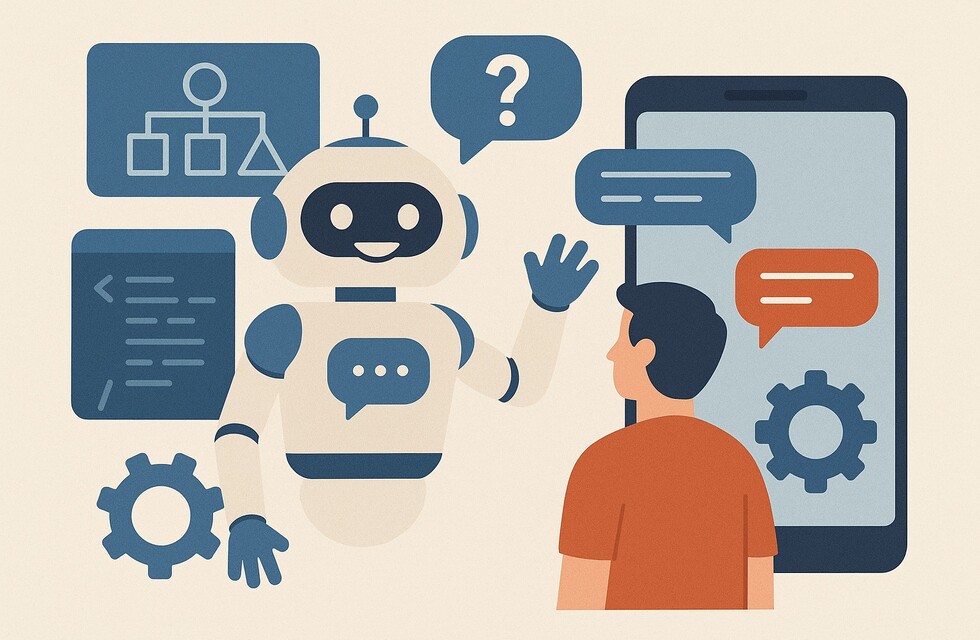
Are you finding it hard to provide quick customer service, offer support all day and night and manage high costs? Do not worry, there is an easy fix! Business chatbot development means creating smart programs that talk with customers through text or voice automatically.
Using chatbots, you can respond instantly, make interactions more personal and make your business run smoother. But how do you develop a chatbot? Keep reading, and we will explain everything you need to know about business chatbot development!
Did you know? According to Grand View Research, in 2024, the global chatbot market was worth $7.76 billion. It is expected to grow quickly and reach $27.29 billion by 2030, with an average yearly growth rate of 23.3% between 2025 and 2030. |
When a business wants to use a chatbot, it is important to know that there are many types available. Each type is designed to meet different needs and help with specific customer interactions.
These bots follow a fixed set of rules and decision trees. They work well for basic tasks like answering common questions, booking appointments or creating support tickets. However, they cannot understand complex or unclear messages.
These chatbots use artificial intelligence, including machine learning and natural language processing, to understand what users really mean. They improve over time and can manage more natural, human-like conversations. Great for tasks like lead generation, multi-department support and product suggestions.
A mix of rule-based and AI chatbots, they use scripts for simple queries and AI for more complex questions. Ideal for companies slowly upgrading to smarter chatbot systems.
These bots let users interact through voice commands on platforms like Google Assistant, Siri or Alexa. They are useful in cars, smart homes and hands-free banking services.
Designed to handle large numbers of customer requests, they work with CRM or support systems to respond quickly and effectively. Perfect for businesses that offer 24/7 customer service.
Made for big organizations, they help manage both customer interactions and internal tasks, and can connect with CRM, ERP and cloud tools.
Built from scratch to suit specific business needs, workflows and branding. Best for startups or industries with unique processes.
Developing a chatbot that truly helps your business takes more than just writing replies. You need a clear plan to do it right. Here is a simple step-by-step approach to guide you through the process:
Tip: Start with one clear goal, like helping customers check their order status or make appointments.
There are two main types of chatbots: Rule-based bots and AI-powered bots, which we discussed in the blog above. While rule-based bots work using set rules and scripts and only respond to specific questions, AI-powered bots use artificial intelligence and natural language processing (NLP) to understand ways people talk. Therefore, if you want your chatbot to offer more personalized and human-like replies, go with an AI-powered bot.
You can build a chatbot in two main ways:
And do not worry, with the right experts, you can easily build a chatbot that fits your exact needs and processes.
A well-planned chat flow helps users get what they need easily. Here are some tips:
Pro tip: Use drag-and-drop chatbot design tools to plan the conversation before you start building.
To make your chatbot smart, give it real data, like common customer questions, product details and real conversations. Then, fine-tune it using AI tools that help it understand:
After training, test your chatbot to make sure it works well.
Regular testing and updates help your chatbot get better and serve users more effectively.
Connect your chatbot with the systems you already use to make it truly useful. These systems include:
Example: A chatbot connected to your inventory system can instantly answer questions like, “Is this item available?”
Security and privacy are very important when building AI chatbots, especially when handling sensitive information. Use strong protections like:
A safe chatbot earns user trust and helps avoid legal problems.
Launching your chatbot is not the end. Keep testing it with A/B tests, gather user feedback and use data to make it better over time. Here are some important things to consider:
Suggested Read: Enhancing Customer Experience with AI: Personalization, Chatbots, and Recommendations
Chatbots are changing how businesses interact with customers by providing fast, efficient and personalized support. They handle common questions, offer quick help and give tailored suggestions, which frees up human agents for tougher tasks. With smarter AI, chatbots can better understand users and improve service. Start using chatbots today to boost your customer experience!
Want to use AI and automation to improve your business? See how 4Seer can help you simplify your work with smart, data-based solutions. With tools like predictive analytics and easy-to-use automation, we can help you stay ahead in today’s digital world. Contact us today to learn more!
Artificial Intelligence (AI) has been increasingly utilized by businesses to...
Artificial intelligence (AI) is the ability of machines to perform...

Artificial Intelligence (AI) has become a buzzword in many industries...
AI (Artificial Intelligence) in manufacturing refers to the use of...

Introduction The concept of artificial intelligence isn’t new. Scientists and scholars have...
Imagine this: a customer visits your website just before midnight...
Internal support teams are feeling more pressure than ever, with...

In 2026, AI chatbots are changing the way businesses communicate...

Artificial Intelligence (AI) has been making remarkable advances in many...

Artificial Intelligence (AI) technology is a form of computer intelligence...
 Back To Previous Page