
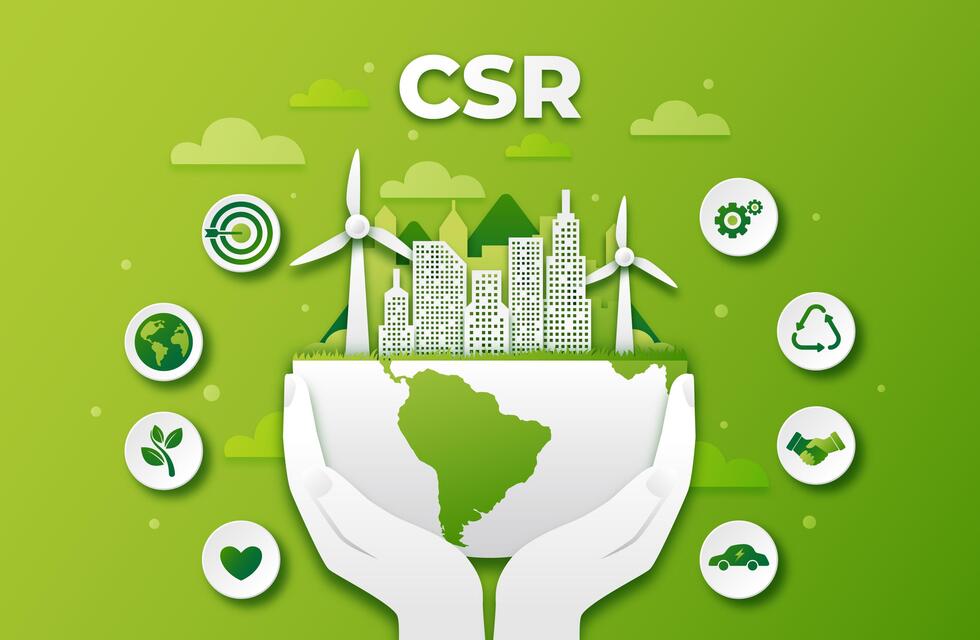
Sustainability disclosure has shifted from voluntary practice to regulatory mandate. The frameworks driving this change – the Corporate Sustainability Reporting Directive (CSRD), European Sustainability Reporting Standards (ESRS) and Task Force on Climate-related Financial Disclosures (TCFD) are redefining what companies must report, how they must report it and to what standard of assurance.
For organizations that operate on a multinational basis or have European markets, knowledge of these standards is no longer optional. Compliance impacts market access, investor confidence and operational risk profiles.
The acceleration of ESG reporting requirements is a reflection of converging pressures from multiple stakeholders.
Institutional investors now integrate ESG metrics into valuation models and capital allocation decisions. Regulators are closing disclosure gaps that previously allowed companies to selectively report favourable data. Supply chain partners increasingly require sustainability credentials as procurement criteria.
These shifts have elevated the level of ESG disclosure from communications exercise to a core business function with direct implications for financing costs, market positioning and regulatory stand.
The Corporate Sustainability Reporting Directive is the most ambitious sustainability regulation that the EU has seen so far. It substantially extends the reporting obligations beyond the previous Non-Financial Reporting Directive (NFRD), both in the number of companies covered and the depth of disclosure required.
CSRD applies to large companies in the European Union, SMEs that are listed on the stock market and non-European-based companies that make significant revenue within the European Union. This extraterritorial reach means that organizations headquartered in Asia, North America or the Middle East may be subject to scope based on their European revenue footprint alone.
The directive requires disclosure in the areas of climate impact, social welfare, governance practices and long-term strategic planning. Critically, CSRD provides for mandatory third party assurance (limited third party assurance initially, then reasonable assurance) of sustainability data that places it under the same scrutiny as financial statements.
This assurance requirement poses significant operational challenges. Companies are required to create audit trails, set up internal controls and maintain data quality standards that the typical sustainability function was never built to meet.
While CSRD defines the legal requirement, the European Sustainability Reporting Standards define the technical framework for complying with that requirement. ESRS defines what companies need to disclose, how and with what level of granularity.
The standards cover twelve topical areas that relate to environmental factors (climate, pollution, water, biodiversity, resource use, circular economy), social factors (workforce conditions, supply chain labour practices, community impact, consumer safety) and governance factors (business conduct, internal controls and management accountability).
ESRS introduces double materiality as a foundational principle. Companies have to evaluate sustainability issues from two perspectives: how the issue affects the business from a financial perspective and how the business affects society and the environment. This dual lens prevents selective reporting that acknowledges risks to shareholder value while ignoring externalities.
The practical implication is huge. Double materiality assessments require cross-functional input, stakeholder engagement and documented methodology – all subject to external review. Organizations with limited data infrastructure often find serious gaps when they are trying to do their own first ESRS aligned disclosure.
The Task Force on Climate-related Financial Disclosures focuses specifically on climate risk and opportunity. Where ESRS deals with sustainability on a broad level, TCFD offers a more targeted framework to understand the impacts of climate change on business resilience, asset values and strategic positioning.
TCFD structures disclosure around four pillars: governance, strategy, risk management and metrics/targets. It obliges companies to communicate how climate considerations are taken into account as part of board oversight, strategic planning and operational risk assessment, backed up by quantitative data on emissions and climate-related targets.
Multiple jurisdictions have taken TCFD recommendations into national regulation; making climate disclosure mandatory for certain sectors in the UK, Japan, New Zealand and elsewhere. For companies with international operations, TCFD alignment is often a common denominator to different regulatory regimes.
Although CSRD, ESRS and TCFD differ in origin and their scope, they share common objectives: to standardize disclosure, to facilitate comparability and to link sustainability performance to financial materiality.
The frameworks are increasingly interoperable. ESRS has incorporated TCFD’s climate disclosure structure, so that there is less duplication for companies subject to both. However, alignment is not automatic. Different boundaries, metrics and reporting timelines need careful mapping in order to ensure consistency across the disclosures.
Organizations that treat each framework as a separate compliance exercise often end up duplicating efforts and have inconsistent data. Those that build integrated reporting infrastructure – with unified data collection, standardized taxonomies and centralized governance – achieve compliance more efficiently while producing insights to inform strategy.
Meeting CSRD, ESRS and TCFD requirements demands capabilities that many organizations lack.
The first challenge is the data architecture. Sustainability data is usually stored in disconnected systems – HR systems, utility records, procurement records, facility management systems. Consolidation of this information into auditable datasets therefore requires data engineering skills and sustainability knowledge.
Assurance readiness adds to the difficulty. External auditors will test the data lineage, calculation methodologies and internal controls. Organizations that are used to narrative sustainability reporting have to introduce documentation standards similar to financial reporting.
Regulatory adaptation is an ongoing investment process. Standards continue to change as regulators refine requirements and increase scope. Static approaches to compliance become rapidly outdated; sustainable reporting infrastructure should be able to accommodate change without completely redesigning.
Companies are increasingly realizing that spreadsheet-based methods are unable to scale to meet these demands. The complexity of multi-framework alignment, in combination with assurance requirements and evolving standards, favour systematic solutions rather than manual processes.
Also Read: Why Transparency in ESG Reporting is Crucial for Business Success
CSRD, ESRS and TCFD are setting a new bar for corporate accountability. Organizations that build robust reporting infrastructure now will meet compliance requirements while generating decision-useful insights. Those that delay face compressed time lines, increased implementation costs and higher regulatory risks.
4Seer’s 4Scope platform supports this transition by bringing together automated data management and reporting capabilities aligned to global standards – bridging the gap between ambition to sustainability and operational execution. To learn more about how structured ESG reporting can enhance your compliance and strategic decision-making, get in touch with us today.
Continue Reading: The Power of ESG Reporting Software in Driving Business Growth and Sustainability

In today’s fast-changing business world, sustainability is not something optional;...

Over the 20th Century, business organizations have earned themselves the...

Have you ever wondered why certain investments result in better...

Contemporary business practices have expanded to serve various values at...

Businesses today have become more aware of the need to...

In the wake of all the worries surrounding climate change,...
ESG (Environmental, Social and Governance) is now a key factor...

Environmental, Social and Governance (ESG) factors are becoming more important...

The IFRS Foundation unveiled significant progress towards the establishment.

In the ever-changing, ever-competitive world of businesses with towering heights...

An ESG readiness assessment is a helpful way to check...

In an increasingly regulated world, companies need to report their...

In the realm of sustainability reporting, ESG reporting has become...

In today's world, the need for sustainable business practices has...

CFOs Are Now Data Orchestrators, Election News Moves Markets, FICO...

The best opportunities are not the riskiest or priciest but...
Managing Environmental, Social and Governance risks has become a key...

Environmental, Social and Governance (ESG) practices have transitioned from external...

Today, Environmental, Social and Governance (ESG) factors are more than...

Environmental, social, and governance (ESG) factors are becoming increasingly important...
 Back To Previous Page